
Seasonal LiFePO4 Power Planning: Summer Heat, Winter Cold and Changing Loads
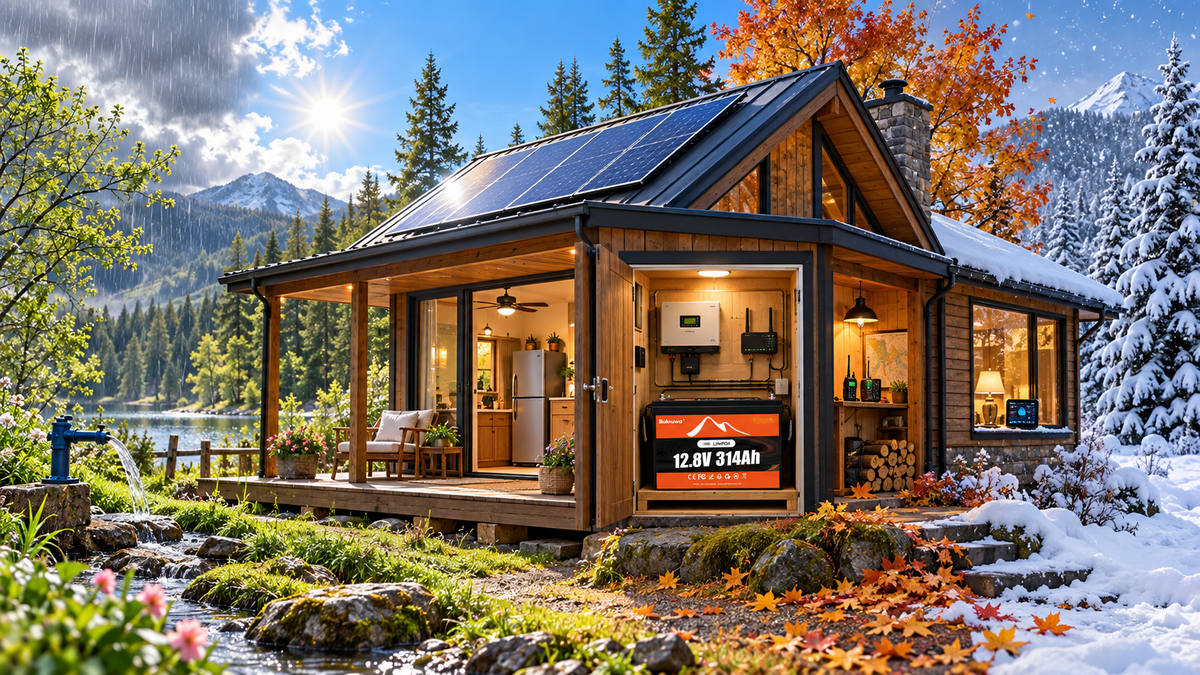
Seasonal LiFePO4 power planning is not simply a matter of buying more battery capacity. Summer heat, winter cold, changing daylight and seasonal equipment can all change how much energy a system uses, how quickly it recharges and when charging should pause.
Quick answer: what changes with the seasons?
A well-planned system is reviewed whenever the weather or use pattern changes. Three factors matter most:
- Daily energy use: fans, refrigerators and water pumps may work more often in summer; lighting, communications and water-system equipment may run longer in winter.
- Charging opportunity: long sunny days can provide more charging time, while short days, clouds, shade and snow can reduce daily solar harvest.
- Battery conditions: excessive heat should be avoided, and LiFePO4 charging must remain within the temperature limits stated for the specific battery and charger.
The goal is not to predict every day perfectly. It is to identify the most demanding realistic season, preserve an appropriate reserve and make sure the charger, wiring, protection devices and battery management system are suitable for the expected current and temperature.
Seasonal power planning at a glance
| Season | Loads that may change | Charging conditions | Planning priority |
|---|---|---|---|
| Spring | Water pumps, ventilation and occasional lighting | Variable clouds and rain | Inspect connections, clean panels and update the load list |
| Summer | Refrigeration, fans, pumps and device charging | Long days, but hot panels may operate less efficiently | Control heat and check the real daily energy balance |
| Autumn | Longer lighting hours and changing weekend use | Shortening days and more variable weather | Prepare reserve capacity and test the charging path |
| Winter | Lighting, communications and water-system controls | Short days, low sun, cloud, shade or snow | Respect low-temperature charging limits and prioritize essential loads |
Summer heat: plan for both temperature and changing loads
Summer can look easy because solar days are longer, but the load side often grows at the same time. A portable refrigerator may cycle more frequently, ventilation fans may run for longer periods, and pumps or electronics may be used more often. Consequently, a system that felt comfortable in spring can finish a hot day with less reserve than expected.

Keep the battery out of avoidable heat
Install the battery in a dry, secure location that follows the product manual. Avoid direct sunlight, engine compartments and tightly sealed spaces that can trap heat. A compartment should not expose the battery to rain or conductive debris, and any ventilation arrangement must remain consistent with the enclosure and installation requirements.
Solar panels also respond to temperature. Bright sunshine is helpful, but higher cell temperature can reduce panel voltage and conversion efficiency. This does not mean summer solar performs poorly; it means that nameplate wattage multiplied by daylight hours is not a reliable daily-energy estimate. Use the charge-controller history or a battery monitor to learn what the system actually collects at the site.
Account for startup current
Refrigerators, pumps and other motor-driven equipment can draw a brief startup current that is higher than their normal running current. Daily watt-hours help estimate runtime, but they do not confirm whether a system can start a load. Check the equipment label or manual, then confirm that the battery BMS, wiring, fuse, connectors and any DC or AC power equipment can support both continuous demand and the short peak. The battery is intended for energy storage, not for starting a vehicle engine.
Winter cold: distinguish charging limits from discharge behavior
Cold-weather LiFePO4 guidance is sometimes reduced to “the battery cannot be used below freezing.” That statement is too broad. Low-temperature charging is the main concern because charging cells outside their permitted range can cause damage. Some batteries or BMS configurations can block charging when the cells are too cold. Do not bypass that protection.
Discharge may be permitted at temperatures below the charging threshold, although available performance can change in cold conditions. Exact limits vary by battery model, BMS configuration and manufacturer instructions. Check the operating and charging ranges for the specific BUKNUWO model before planning a winter installation. Battery temperature matters more than a distant outdoor weather reading.

Cold solar panels and winter energy are different questions
Solar modules can convert sunlight efficiently in cool conditions, so cold weather alone does not automatically reduce panel efficiency. However, total winter production may still fall because daylight is shorter, the sun is lower, clouds are more frequent, and snow, ice or shade may cover part of the array. Build the winter plan around measured or conservatively estimated daily production—not summer results.
If a system needs cold-weather charging, use only a battery, enclosure or warming solution approved for the installation. Avoid improvised heaters, direct hot-air sources or modifications that could create uneven heating or a fire risk. When the battery BMS blocks charging, treat the event as protection rather than a fault to defeat.
Spring and autumn: the variable seasons
Shoulder seasons often bring the least predictable energy balance. Spring may add pumping, water transfer or ventilation after a dormant period. Autumn can add longer lighting hours while solar days become shorter. Rain, debris and temperature swings may also expose loose connections, water ingress or shading that was not obvious in summer.

Use these seasons as maintenance checkpoints. Inspect cable security, terminal covers, fuses and mounting hardware with the system safely isolated. Clean solar panels according to their instructions, review charge-controller history and confirm that equipment added during the year appears in the energy budget.
A practical seasonal LiFePO4 planning method
1. Make one load list for each season
Record each device, its power and the expected daily operating time. Do not use one annual average if summer refrigeration and winter lighting are substantially different. Separate essential loads—such as communications or critical water controls—from optional loads that can be postponed.
2. Estimate daily energy, then add a planning margin
For a simple DC estimate:
Daily energy (Wh) = device power (W) × operating time (hours)
Add the results for all devices. If only current is known, use voltage × current × time as an initial estimate. Actual use can vary with temperature, duty cycle, wiring loss and equipment behavior, so measured data is better whenever available. A planning margin is not a promise of runtime; it provides room for forecast error and changing conditions.
3. Check peak demand separately
List equipment with motors or compressors and record startup requirements when the manufacturer provides them. Several devices can also overlap. Capacity in amp-hours or watt-hours describes stored energy, while BMS and system current ratings determine whether a load combination is acceptable. Both checks are necessary.
4. Model the weakest charging season
Use site-specific solar data or measured controller history where possible. Include shade, array direction, clouds, snow and seasonal daylight. Then ask whether the charging system can replace a typical day’s use and how many days recovery may require after poor weather. For more system context, see how to connect a BUKNUWO LiFePO4 battery to a solar system.
5. Define reserve and load priorities
A reserve target should reflect how difficult it is to recharge, how important the loads are and how quickly use can be reduced. Weekend recreation and full-time off-grid use rarely need the same reserve strategy. The related guide, Weekend Use vs Full-Time Off-Grid Use: How Battery Planning Changes, explains that distinction.
6. Verify the complete electrical path
Confirm charger settings, solar-controller compatibility, wire size, fuse or breaker selection, connector ratings and load requirements. Protection devices and cables should be selected for the actual installation and local requirements. If the design is unfamiliar or serves important loads, have it reviewed by a qualified installer.
Which battery capacity fits a seasonal system?
Capacity should follow the seasonal energy budget, not the season name. The comparison below is a planning starting point rather than a guarantee of suitability or runtime.
| BUKNUWO option | Nominal energy | Possible planning role | Review before purchase |
|---|---|---|---|
| 12.8V 100Ah | 1,280Wh | Light mobile or seasonal use with a controlled load list | Daily runtime, startup current and recharge access |
| 12.8V 150Ah | 1,920Wh | Additional reserve for weekend use or variable loads | Peak demand, compartment size and charging time |
| 12.8V 314Ah | 4,019Wh | Longer use or systems with several recurring loads | Weight, mounting, BMS limits and charger capacity |
| 12.8V 628Ah | About 8.04kWh | Extended reserve for larger seasonal energy budgets | Space, cable protection, total system current and recovery time |

The smallest option that meets the realistic energy, peak-current and reserve requirements is often easier to install and recharge. A larger battery may be appropriate when daily use is higher or poor-weather reserve is important, but oversizing without increasing charge capability can lead to long recovery times. Review current product specifications before purchase because configurations can change.
Common seasonal planning mistakes
- Using summer solar results for winter: daylight, sun angle, clouds, shade and snow can change daily production.
- Looking only at amp-hours: stored energy does not confirm that a compressor or pump can start.
- Treating a BMS cutoff as extra usable range: protection limits are not routine operating targets.
- Bypassing low-temperature charge protection: wait until the battery is within its approved charging range.
- Placing the battery in direct sun or a heat-trapping enclosure: follow the product installation requirements.
- Adding high-power heating without recalculating: resistance heating can dominate a small system’s energy budget.
- Assuming more capacity fixes every problem: charger size, solar input, BMS current, cables and protection still matter.
Seasonal inspection checklist
- Update the device list and daily operating time.
- Identify motor and compressor startup requirements.
- Review battery state-of-charge trends and charge-controller history.
- Confirm the battery’s charging and operating temperature ranges.
- Check the enclosure for direct sun, trapped heat, water or debris.
- Inspect mounting, cable security and protection devices safely.
- Check panels for new shade, dirt, leaves, snow or damage.
- Set essential-load priorities for extended poor weather.
- Confirm that storage settings follow the battery manual during long idle periods.
Frequently asked questions
Can a LiFePO4 battery charge below freezing?
Do not assume that it can. Low-temperature charging limits vary by model and configuration, and a BMS may stop charging when the cells are too cold. Follow the exact BUKNUWO product manual and compatible charger settings; never bypass a temperature-related charge cutoff.
Can a LiFePO4 battery discharge in cold weather?
Some LiFePO4 batteries permit discharge at temperatures below their minimum charging temperature, but performance and permitted limits are model-specific. Check the product documentation and base decisions on battery temperature rather than only outdoor air temperature.
Does summer heat reduce solar panel output?
Higher solar-cell temperature can reduce voltage and efficiency even on a bright day. Long daylight may still produce strong daily energy, so use measured yield or a site-specific estimate instead of assuming either perfect or poor summer performance.
Does snow stop all solar production?
Not necessarily. The effect depends on coverage, light conditions, panel position and the rest of the system. Heavy or persistent coverage can substantially reduce production. Follow the panel manufacturer’s safe procedure for inspection or snow removal.
Should battery capacity change by season?
The installed capacity does not have to change, but the operating plan may. Recalculate the seasonal load, likely charging input and desired reserve. A system can respond by reducing optional loads, adding compatible charging opportunities or selecting more storage when the full design supports it.
Is a 628Ah battery automatically better for winter?
No. It provides more stored energy than a smaller option, but it also needs suitable space, protection and recharge capacity. It does not remove low-temperature charging limits or solve insufficient solar input on its own.
Final planning note
Seasonal LiFePO4 power planning works best as a repeating process: measure the loads, review real charging conditions, respect temperature limits and adjust priorities before the weather changes. A BUKNUWO 100Ah, 150Ah, 314Ah or 628Ah battery can play a different role depending on the application, but capacity is only one part of a safe, workable system.
Important: BUKNUWO LiFePO4 batteries discussed here are intended for energy-storage applications and should not be used as vehicle engine-starting batteries. Always follow the current product manual and applicable electrical requirements.