
How long do you want to run?
Battery energy, actual consumption, system losses and usage schedule together determine usable time.

HOME ENERGY. YOUR PRIORITIES.
For essential devices during outages, and for everyday solar storage.
Start planning from your household power needs.
ENERGY FOR EVERYDAY LIFE.
Be ready before you need it.
01 / Backup for essential devices
02 / Everyday solar storage
03 / Upgrade an existing system
Keep exploring ↓01 / FIND YOUR APPLICATION
Start from the problem you want to solve.
Keep your storage plan close to real life.
Lighting, network equipment, phone charging and refrigeration. List the loads you want to keep, then plan suitable storage and supporting equipment based on wattage and runtime.
Select the devices to support ↗A power outage hits in the evening. The family wants to keep lighting in common areas, phone communication, and backup power for the fridge.
Application scenarios are for illustration; actual power coverage is determined by the battery and supporting system together.
02 / SET YOUR POWER PRIORITIES
Select the devices you want to keep running,
and build your household power needs list.
03 / UNDERSTAND YOUR ENERGY SYSTEM
Understand what each part does,
to make product choices better informed.
Plan the available
recharging sources by conditions
Verify charging type,
voltage and current requirements
Store electricity
ready for later use
Configure inversion, switching and protection
to system needs
Provide matching power
for the planned devices
Functional illustration, not a wiring diagram. Some functions may be integrated in one device; connecting fixed household circuits must be done by a qualified person per equipment requirements and local regulations.
Battery energy, actual consumption, system losses and usage schedule together determine usable time.
Device running and startup demands must be verified together with battery, inverter and distribution capability.
04 / EXPLORE THE BATTERY
The battery is part of the system.
Confirm the right model against your equipment requirements.
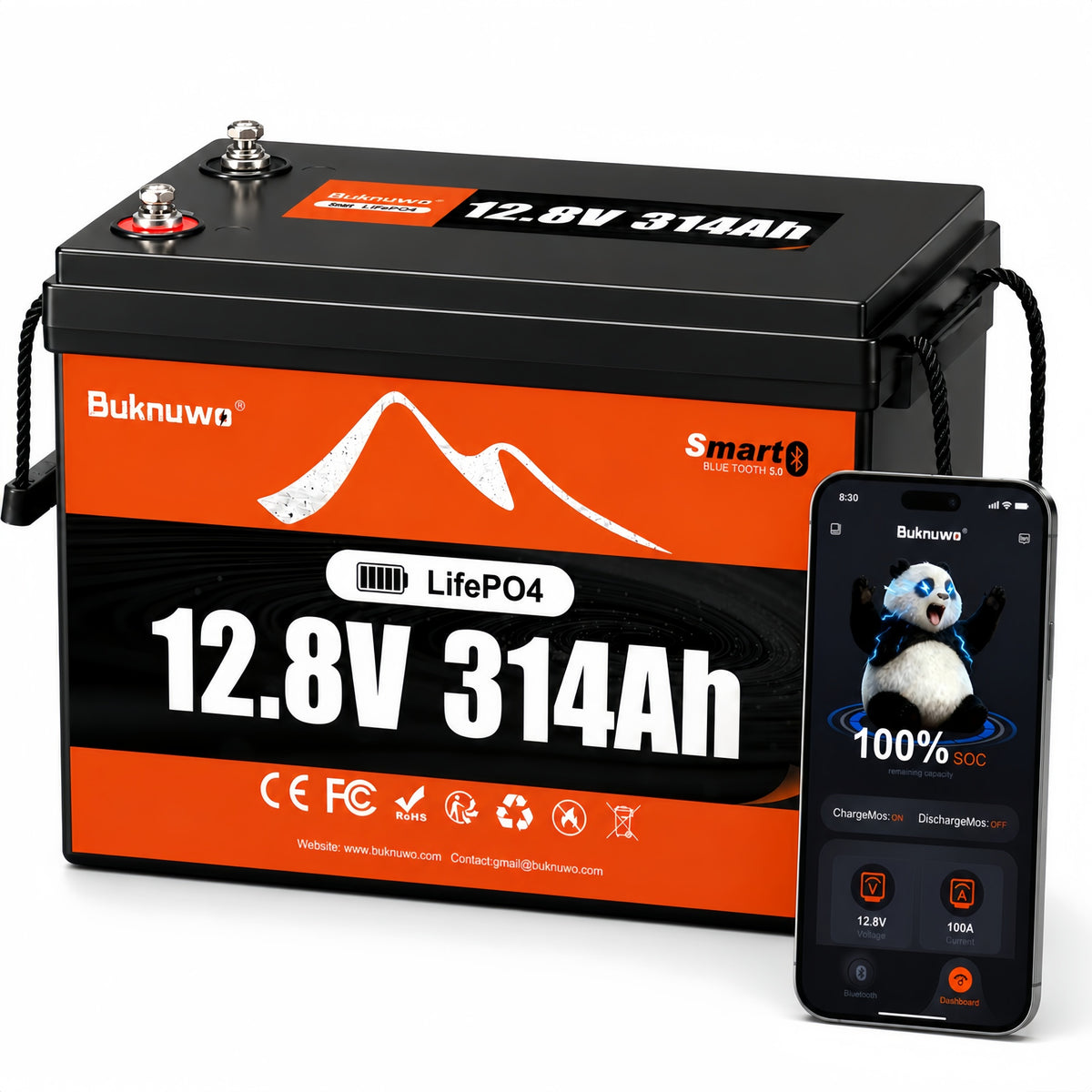
DEEP-CYCLE ENERGY STORAGE
Built for deep-cycle energy storage with Bluetooth battery status monitoring. Start with this battery's basic specifications, then evaluate system fit against inverter and load requirements.
Shows product information for a single battery. Household AC power requires a matched inverter and related equipment; system voltage, continuous output and expansion requirements should be confirmed per the specific model. Usable energy depends on system losses, operating conditions and settings.
05 / TURN NEEDS INTO A PLAN
You don't need to know every parameter at first.
Organize what you have, then confirm step by step.
Record device names, quantity and rated wattage, and note which devices run simultaneously.
Define the time periods to support, desired backup duration, and whether devices run intermittently.
Provide the model and nameplate information of your inverter, solar charging equipment or existing battery.
Confirm space, installation environment, recharging conditions, and whether connection to fixed household circuits is needed.
06 / QUESTIONS, ANSWERED
Turn common questions
into clearer decision inputs.
It depends on the appliances' input requirements. Common household AC appliances usually need a matched inverter and related protection equipment; connecting to fixed household circuits also requires appropriate connection, switching and distribution plans. The battery alone is not a complete household AC power system.
You can start by evaluating a matched grid-charging setup. Solar is one optional recharging source; whether to add it depends on usage schedule, site conditions and system equipment requirements.
How much energy is stored and how much power can be output at the same time are two separate questions. Besides capacity, check the battery's output capability, the inverter's rated and startup capability, and the wattage demands of your selected devices.
Whether automatic switching occurs, and how fast, depends on the inverter, switching equipment and the whole system configuration. Only after confirming the specific equipment and its functions can this be judged; it cannot be concluded from the battery model alone.
First clarify device wattage, quantity, runtime and simultaneous use, then consider usable battery energy, system losses and margin. Devices like refrigerators also involve intermittent operation and startup demands. The desired backup duration on this page is for organizing needs, not a product runtime forecast.
You need to verify the existing equipment model, system voltage, communication requirements, connection limits and battery condition. Do not assume compatibility or expansion based on the same voltage alone; confirm the plan with the specific manuals and system requirements.
LET’S PLAN YOUR HOME ENERGY
Start from the loads you want to keep.
Bring your existing equipment information to make selection better grounded.
START WITH WHAT YOU KNOW
During consultation you can add device models, nameplates, wattage and installation space information.
Back to power planning ↗