
LiFePO4 Battery for Camping: How Much Capacity Do You Need?
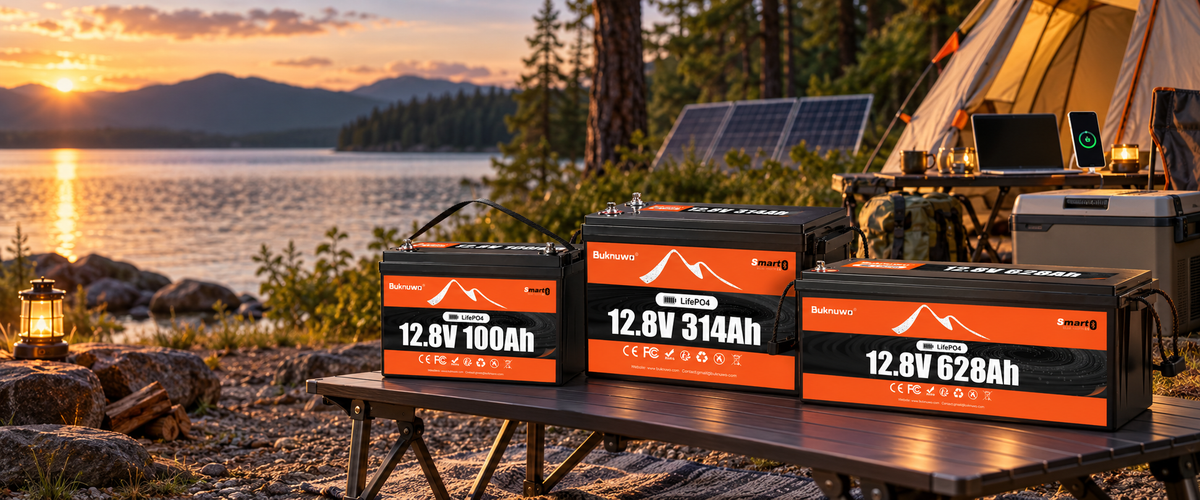
A LiFePO4 battery for camping can help run lights, charge phones and laptops, power a fan, and support a compatible camping refrigerator when shore power is unavailable. But the right battery capacity depends on what you use, how long you use it, whether your equipment runs on DC or AC, and whether solar charging is available.
Quick answer: Start by adding the daily energy use of your essential devices in watt-hours (Wh). Then allow extra capacity for changing weather, longer operating times, inverter losses and unexpected needs. A smaller battery may be enough for basic charging and lighting, while a larger-capacity battery may be more suitable for a refrigerator, longer trips or a stationary base camp.
This guide is for capacity planning only. Always confirm battery voltage, charging requirements, maximum continuous discharge current and equipment compatibility before installation.
Why LiFePO4 Batteries Are Useful for Camping
Camping power systems need to balance usable energy, weight, charging time and safety. LiFePO4 batteries are often considered for camping because they can provide stable DC power and support repeated charge-and-discharge use when operated within the manufacturer’s specifications.
Common camping applications include:
- LED campsite lighting
- Phones, cameras and tablets
- Laptops and communication devices
- 12V fans
- Compatible portable refrigerators or coolers
- Small water pumps and other low-voltage equipment
A camping battery should not be selected by capacity alone. Voltage, device current, wiring, fusing, charger compatibility and the battery management system’s limits also matter.
Start With Your Camping Style
The best camping battery capacity is different for every trip. Before comparing battery models, decide how the system will be used.
| Camping style | Typical equipment | Main planning concern |
|---|---|---|
| Day trip or overnight stay | Phones, lights and cameras | Portability and basic charging |
| Weekend camping | Lights, phones, fan, laptop and refrigerator | Daily energy use and recharge access |
| Extended off-grid camping | Refrigerator, electronics, pumps and multiple users | Reserve capacity, charging conditions and system expansion |
| Fixed base camp | Several devices used over longer periods | Total stored energy and safe installation |
This table is a planning guide rather than a guarantee. Actual energy use varies with the specific equipment, temperature, operating mode and user habits.
Use Watt-Hours, Not Amp-Hours Alone
Amp-hours describe charge capacity, but they do not tell the whole story unless the battery voltage is also known. Watt-hours make it easier to compare stored energy with the energy used by your camping equipment.
Nominal battery energy (Wh) = nominal voltage (V) × capacity (Ah)
For example, a nominal 12.8V 100Ah battery contains approximately 1,280Wh of nominal energy:
12.8V × 100Ah = 1,280Wh
This does not mean every device will receive exactly 1,280Wh. Available energy can be affected by battery protection limits, temperature, discharge rate, wiring losses, inverter efficiency and the user’s reserve target.
Estimate the Energy Used by Your Camping Equipment
For equipment that operates at a relatively steady power level, a basic estimate is:
Daily energy use (Wh) = device power (W) × operating time (hours)
If a 10W light is used for five hours, its estimated energy use is 50Wh. Repeat this process for each device and add the results together.
| Device | What to check | Why estimates may change |
|---|---|---|
| LED light | Rated watts and hours of use | Brightness setting and number of lights |
| Phone or camera | Charger rating and number of charges | Battery level and charging losses |
| Laptop | Charger rating and active use time | Screen brightness and workload |
| Fan | Power at the selected speed | Speed setting and ambient temperature |
| Camping refrigerator | Measured or manufacturer-stated daily consumption | Ambient temperature, thermostat setting, ventilation and door openings |
Whenever possible, use the appliance label, manufacturer documentation or a power meter instead of a generic online estimate. Refrigerators and compressor-driven devices cycle on and off, so their maximum rated power should not automatically be treated as their all-day average consumption.
Do Not Ignore Startup or Surge Power
Some appliances briefly draw more power when a compressor, pump or motor starts. This startup demand may be much higher than the normal running power, even though it lasts only a short time.
Before operating such equipment, confirm that:
- The battery and its BMS can support the required current.
- The inverter, if used, can support both continuous load and startup surge.
- The cables, connectors and fuse are appropriately selected.
- The total load of devices operating at the same time remains within system limits.
A battery may have enough stored energy for a trip but still be unsuitable for a load that demands more current than the battery system can safely provide.
DC Equipment and AC Equipment Are Not the Same
Compatible 12V DC equipment may be connected through an appropriately designed and protected DC circuit. Household-style AC appliances require an inverter that matches the battery-system voltage and the appliance load.
When AC appliances are used, allow for inverter conversion losses. The inverter also needs enough continuous output and surge capability for the connected equipment. BUKNUWO does not sell inverters, so customers should verify compatibility with the inverter manufacturer or a qualified installer.
How to Choose a Camping Battery Capacity
Rather than selecting a battery from a single appliance, use the following process:
- List essential devices. Separate necessary equipment from optional comfort items.
- Estimate daily energy use. Use watt-hours for each device.
- Multiply by the number of days between recharging opportunities.
- Add a practical reserve. Allow for weather, changing usage and conversion losses.
- Check current demand. Include equipment that may start at the same time.
- Confirm charging plans. Consider how quickly the battery can be recharged from an appropriate charger or solar system.
Which BUKNUWO Capacity May Fit Your Camping Setup?
The following descriptions are broad application examples, not fixed runtime promises. Always compare your energy estimate with the specifications on the exact product page.
BUKNUWO 12.8V 100Ah: A Practical Choice for Light Camping Loads

The BUKNUWO 12.8V 100Ah battery provides approximately 1,280Wh of nominal energy and is rated for up to 100A maximum continuous discharge. It may be a practical starting point for short trips with modest loads such as LED lights, phones, cameras, a laptop or a compatible 12V fan.
Consider this model if:
- You normally camp for one or two nights.
- Your main needs are lighting and personal electronics.
- You can recharge regularly.
- You prefer a smaller battery over a large stationary setup.
If a camping refrigerator is included, check its measured daily consumption before deciding that 100Ah is sufficient.
BUKNUWO 12.8V 314Ah: More Reserve for Weekend Camping

The BUKNUWO 12.8V 314Ah battery provides approximately 4,019Wh of nominal energy and is rated for up to 200A maximum continuous discharge. It may be better suited to campers who use a compatible refrigerator, lighting, electronics and other daily loads, or who want more reserve between charging opportunities.
Consider this model if:
- You take multi-day or weekend camping trips.
- A camping refrigerator is part of the setup.
- Several people need to charge devices.
- Solar charging may be limited by shade or changing weather.
The 314Ah model can store more energy than the 100Ah model, but the complete system must still support the continuous and startup current of the connected equipment.
BUKNUWO 12.8V 628Ah: High-Capacity Energy Storage for Extended Stays

The BUKNUWO 12.8V 628Ah battery provides approximately 8,038Wh of nominal energy and is rated for up to 200A maximum continuous discharge. It may suit longer off-grid stays, fixed base camps or vehicle-supported setups with higher daily energy use and longer gaps between charging.
Consider this model if:
- You expect to remain off-grid for several days.
- Your setup includes a refrigerator and several additional devices.
- You want a larger reserve for periods of weak solar production.
- Your installation can accommodate the battery's size and weight.
This is a large-capacity battery rather than a portable power station. Plan its mounting, cable routing, overcurrent protection and charging system before purchase.
Explore BUKNUWO 12V LiFePO4 batteries
Nominal energy figures are calculated from rated voltage × rated capacity. They do not represent guaranteed energy delivered to every appliance.
A higher-capacity battery is not automatically the best choice. Consider available space, mounting, system voltage, charging time, transport method and the maximum current required by your equipment. Check the exact product dimensions, weight and electrical specifications before purchase.
What Changes When You Add Solar Charging?
Solar panels can replace some of the energy used during a trip, but solar production is not constant. Cloud cover, shade, panel orientation, season, temperature and controller settings can all affect charging performance.
Do not size a camping battery on the assumption that the solar array will deliver its rated output throughout the day. Battery capacity should provide a reasonable buffer when solar production is lower than expected. The solar controller must also be compatible with the battery voltage and LiFePO4 charging requirements.
Camping Battery Safety and Installation Checklist
- Use a charger with a charging profile suitable for the exact LiFePO4 battery.
- Install correctly rated overcurrent protection near the battery as appropriate for the system design.
- Use cables and connectors sized for the expected current and cable length.
- Protect the battery and electrical connections from water, dirt and physical damage.
- Secure the battery so it cannot move during transport.
- Do not cover the battery with loose equipment that may damage terminals or wiring.
- Follow the product manual for charging-temperature and operating-temperature limits.
- Do not use these deep-cycle LiFePO4 batteries as vehicle or engine starting batteries.
If you are unsure about wiring, protection devices or compatibility, consult a qualified installer before operating the system.
A Simple Camping Battery Selection Example
Imagine a weekend setup with lights, phone charging, a fan and a camping refrigerator. Instead of choosing a battery based only on the refrigerator’s advertised wattage, the camper should:
- Check or measure the refrigerator’s typical daily energy use.
- Add the energy used by lights, charging and the fan.
- Multiply the total by the expected number of days without reliable recharging.
- Add a reserve for warm weather, frequent refrigerator opening and lower-than-expected solar production.
- Confirm that compressor startup demand is supported by the complete power system.
This method produces a more useful estimate than selecting a battery from a generic runtime chart.
Frequently Asked Questions
What size LiFePO4 battery do I need for camping?
The right size depends on the total watt-hours your essential devices use each day and the number of days between recharging opportunities. Add a reserve for conversion losses, weather and unexpected use, then confirm voltage and current compatibility.
Is a 100Ah lithium battery enough for camping?
A 100Ah-class battery may suit short trips with modest loads such as lighting and device charging. Whether it can also support a refrigerator or other equipment depends on the appliance’s actual daily energy use, startup demand and the availability of recharging.
How long will a LiFePO4 battery run a camping fridge?
Runtime varies with battery energy, refrigerator consumption, ambient temperature, thermostat setting, ventilation and door-opening frequency. For a realistic estimate, use measured or manufacturer-stated daily energy consumption rather than maximum running watts alone.
Can I power AC appliances from a camping battery?
Yes, if a compatible inverter is used and the complete system can support the appliance’s continuous and startup power. Inverter losses should be included when estimating battery capacity.
Can I use a BUKNUWO deep-cycle battery to start my vehicle?
No. These batteries are intended for compatible deep-cycle applications and should not be used as vehicle or engine starting batteries.
Does a larger battery always mean a better camping setup?
Not necessarily. More capacity can provide a longer energy reserve, but it may also require more installation space, longer charging time and a different transport plan. The best choice balances energy needs with system compatibility and practical installation constraints.
Final Thoughts
The best LiFePO4 battery for camping is the one that matches your actual energy use, recharge plan and equipment current—not simply the largest battery available. Start with essential devices, calculate daily watt-hours, account for startup loads and leave a practical reserve.
For a light overnight setup, a smaller-capacity system may be sufficient. For a camping refrigerator, several users or extended off-grid stays, a higher-capacity battery such as a 314Ah- or 628Ah-class option may provide more flexibility when the complete system is properly designed.
Before purchasing: review the exact BUKNUWO product specifications and confirm voltage, BMS limits, charging equipment, dimensions and intended application.